Indoor vs. Outdoor Banners: Material and Durability Guide
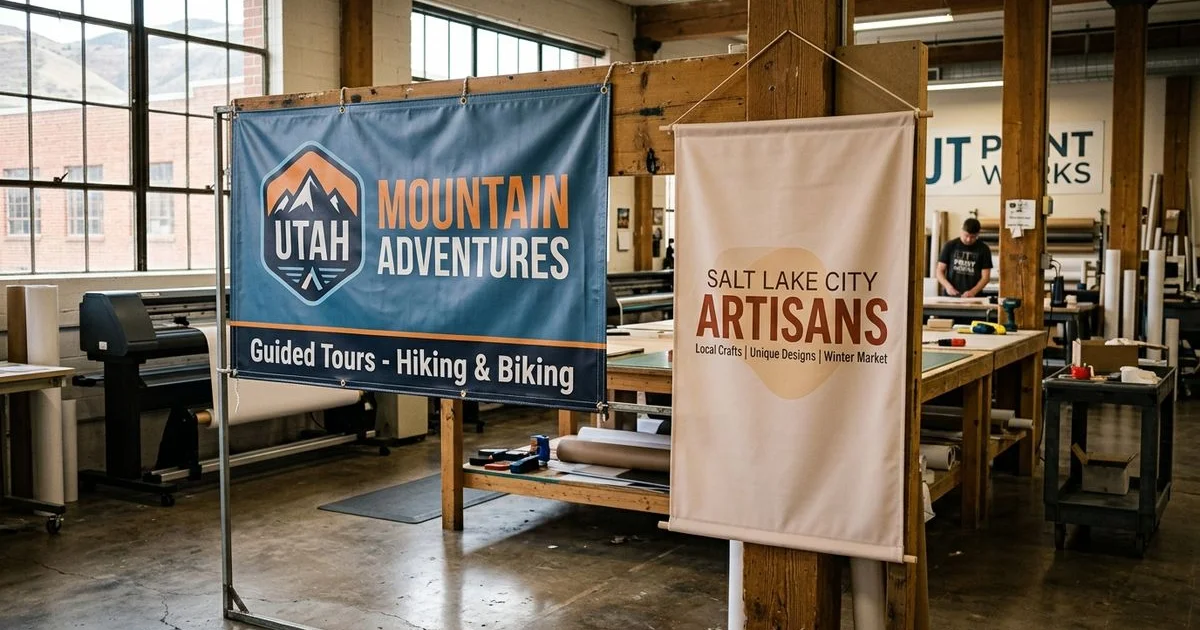
We often see business owners spend hundreds on a beautiful design, only to print it on the wrong material for their venue.
A banner built for an air-conditioned trade show booth will deteriorate quickly if hung outside in the sun and wind.
Choosing the right material saves you money and prevents embarrassing sign failures.
This complete indoor vs. outdoor banners: material and durability guide will help you select the exact specifications for your environment.
Outdoor Vinyl Banners
Vinyl is the absolute standard for outdoor banner printing for several important reasons.
It is waterproof, handles UV light efficiently, and holds up to extreme temperature changes in ways that paper and fabric simply cannot.
We will break down the specific weights and styles available for exterior use.
Standard 13 oz. Vinyl
Our team considers 13 oz. vinyl the workhorse for most temporary outdoor promotions.
The “13 oz.” rating refers to the weight per square yard, which serves as a proxy for thickness and durability.
This specific material is sturdy enough for short-to-medium duration uses like seasonal sales or event signage.
You can expect this weight to realistically last one to three years outdoors in moderate US climates.
Heavy-Duty 18 oz. Vinyl
This thicker, stiffer material handles long-term outdoor installations with ease.
If you plan to install a banner on a building or a high-traffic location where it will hang for months at a time, the upgrade to 18 oz. is completely justified.
We regularly see our 18 oz. installations survive two to five years in demanding weather.
Mesh Vinyl for High Winds
Mesh banners feature small perforations throughout the material to dramatically reduce wind resistance.
Most US commercial printers use a 70/30 print-to-hole ratio, meaning 30% of the surface allows air to pass right through.
Our installers prefer mesh for sports facility fences because it reduces wind load by up to 50%.
The perforations slightly reduce color vibrancy compared to solid vinyl, but the structural integrity gained is significant.
UV Inks and Lamination
Outdoor products require printing with high-quality UV-resistant inks to prevent fading.
Some shops offer an additional UV lamination coat that extends color life much further.
We strongly recommend UV protection for any long-term outdoor installation, especially in high-altitude areas like Utah.
Indoor Banner Materials
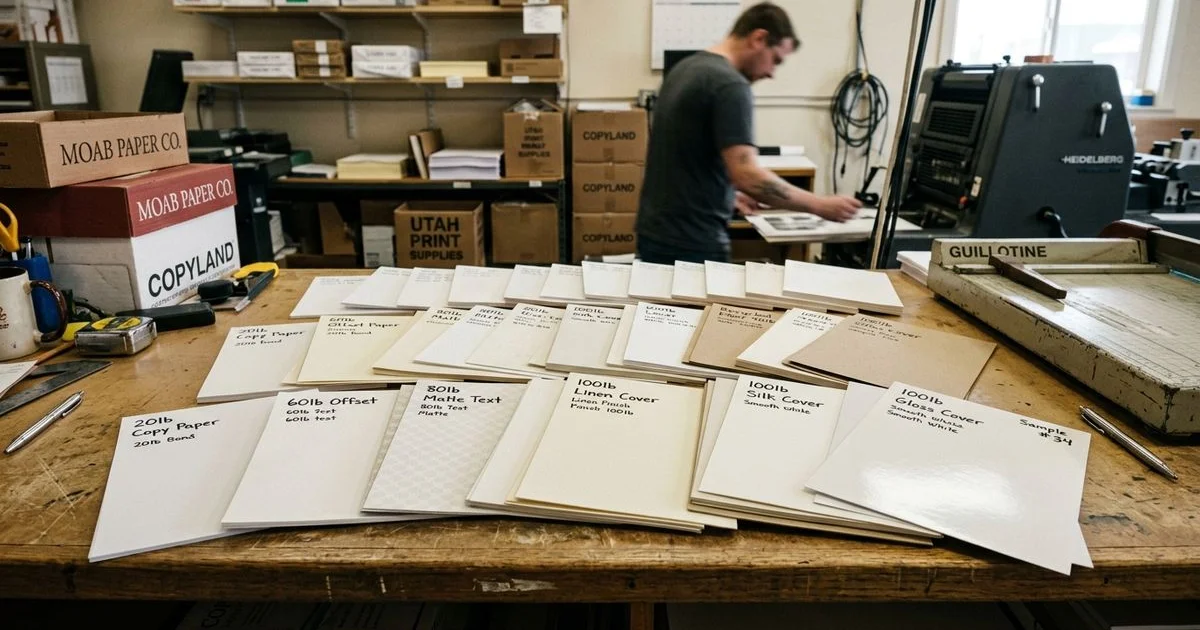
Indoor displays operate in a controlled environment with zero rain and minimal temperature swings. For smaller indoor signage, posters printed on heavyweight paper are often the most economical choice.
This lack of weather exposure opens up more material options and allows for finer detail and premium finishes.
Indoor Vinyl Options
Vinyl remains popular indoors because it is incredibly durable and easy to clean.
We usually print these on a lighter 7 oz. to 10 oz. material.
These lighter options often feature a satin or matte finish.
A matte finish looks much cleaner under harsh retail lighting than a glossy outdoor surface.
Fabric and Polyester
Fabric displays provide a distinctly different look and feel compared to standard plastics.
They absorb light rather than reflecting it, which produces a rich, matte color reproduction.
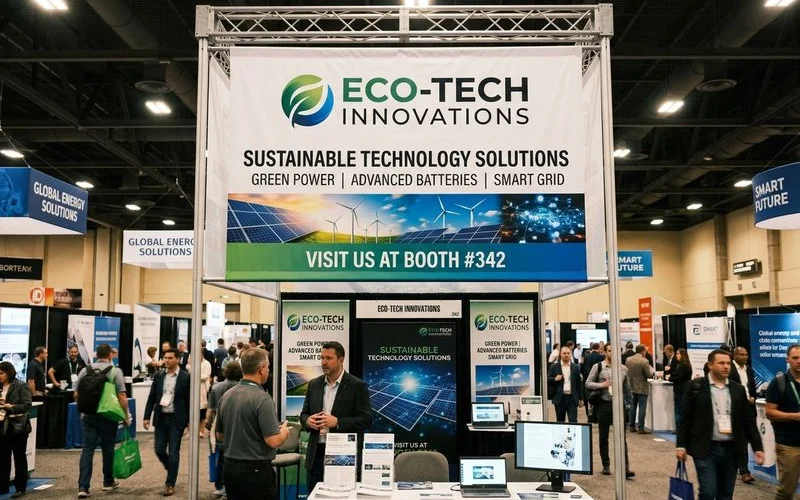
Our corporate clients heavily favor fabric for premium trade show backdrops and red-carpet photography walls.
If you plan to exhibit at major US venues like the Las Vegas Convention Center, your fabric must pass the NFPA 701 fire retardant test.
Event inspectors will actively look for this specific safety certification during move-in.
We print these displays using a dye-sublimation process on a 6.8 oz. polyester to guarantee vivid colors and full safety compliance.
Paper and Retractable Stands
Paper-based materials work strictly for single-use indoor applications, like a temporary event display.
If you need the signage more than once, you should skip paper entirely.
Retractable banner stands use a specific thin, lighter-weight material designed to roll into the casing without creasing.
Our production team uses specialized lay-flat media specifically engineered for retractable hardware.
How Finishing Affects Durability
The base material only represents one part of the durability equation.
How a printer finishes and installs the final piece matters just as much for its long-term survival.
Grommets and Pole Pockets
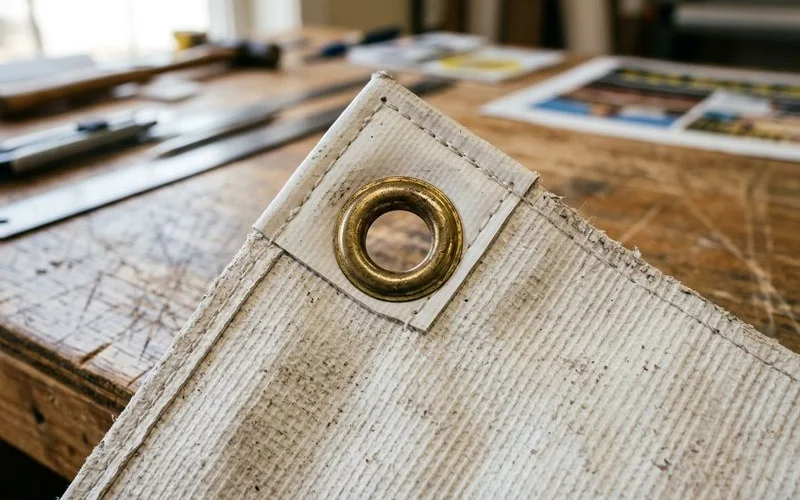
Metal eyelets, called grommets, allow you to hang the display securely with bungee cords or zip ties.
Without them, hanging puts stress directly on the vinyl and leads to immediate tearing.
We place these reinforced grommets every 18 to 24 inches along the edges to ensure maximum stability.
Pole pockets offer a professional alternative for trade show setups.
This finishing method uses a sleeve along the top and bottom edges for a pipe to slide through, which distributes hanging stress evenly.
Hemming and Heat Welding
The edges of a solid banner should always feature a reinforced hem to prevent fraying.
We highly recommend high-frequency heat welding over traditional sewing for outdoor use.
Heat welding physically fuses the vinyl layers together, creating a bond that is actually stronger than the original material itself.
Sewing punctures the edge with tiny holes, which can become weak points during a severe storm.
The Problem with Wind Slits
People often request wind slits for large outdoor installations in consistently windy locations.
We actively discourage cutting these half-moon shapes into solid vinyl.
The standard material features woven scrim fibers inside to provide strength, and cutting slits severs those vital structural threads.
This damage causes the fabric to rip much faster under pressure.
You should simply order a mesh banner instead of ruining a solid vinyl one.
How Long Can You Expect a Banner to Last?
Durability depends heavily on weather conditions, material quality, and post-event storage habits.
Proper storage extends the functional life of your investment significantly.
We see a clear pattern in longevity based on these specific formats:
- Indoor vinyl or fabric, properly stored: 5+ years with light use
- Standard 13 oz. outdoor vinyl in moderate conditions: 1 to 3 years
- Heavy 18 oz. vinyl in demanding conditions: 2 to 5 years
- Mesh vinyl outdoors: 2 to 3 years (the mesh structure reduces installation strain by up to 40%)
- Paper-based indoor banners: Single use or very limited
You should roll your signage around a cardboard tube rather than folding it to prevent hard creases.
Store these rolls in a cool, dry location away from direct sunlight.
Our 13 oz. standard vinyl can handle cold temperatures down to -4°F, but bringing it inside during the off-season preserves the color integrity much better.
Quick Reference for Indoor vs. Outdoor Banners: Material and Durability Guide
| Situation | Recommended Material |
|---|---|
| Short-term outdoor event (1 to 3 days) | 13 oz. vinyl |
| Long-term outdoor installation | 18 oz. vinyl |
| Windy outdoor location or fence | Mesh vinyl (70/30 ratio) |
| Indoor trade show or retail | Indoor vinyl or fabric |
| Premium event backdrop | NFPA 701 certified fabric |
| Retractable banner stand | Retractable-specific material |
We are ready to help you print the perfect display for your next campaign.
You can reference this indoor vs. outdoor banners: material and durability guide anytime you launch a new marketing initiative.
Visit our Banners page for material and finishing options.
You can also request a quote and let us know your installation environment so our team can recommend the exact fit.
My Color Copies Team
Print Production Specialists
My Color Copies is a Utah-based print team serving both local and out-of-state customers with affordable, fast printing services.
Digital Printing ExpertiseNeed help with your print job?
We are here to help with file prep, paper choices, and pricing.
Request a Quote