Tri-Fold vs. Half-Fold: Choosing the Right Brochure Format
We hear from business owners every day who struggle to translate digital information into effective physical handouts. Handing a potential client a tangible piece of marketing material leaves a lasting impression that a quick email simply cannot match. If you want a piece that presents your story clearly, understanding the basics of Tri-Fold vs. Half-Fold: Choosing the Right Brochure Format is your essential first step.
Our professional print service team knows that choosing the right layout is the fundamental cornerstone of a successful campaign. The two most popular choices are the tri-fold and the half-fold brochure, and they are definitely not interchangeable. Each option carries distinct strengths, limitations, and ideal use cases.
Let’s look at the data, see what it actually tells us about print marketing, and explore practical ways to pick the right format.
Understanding the Tri-Fold
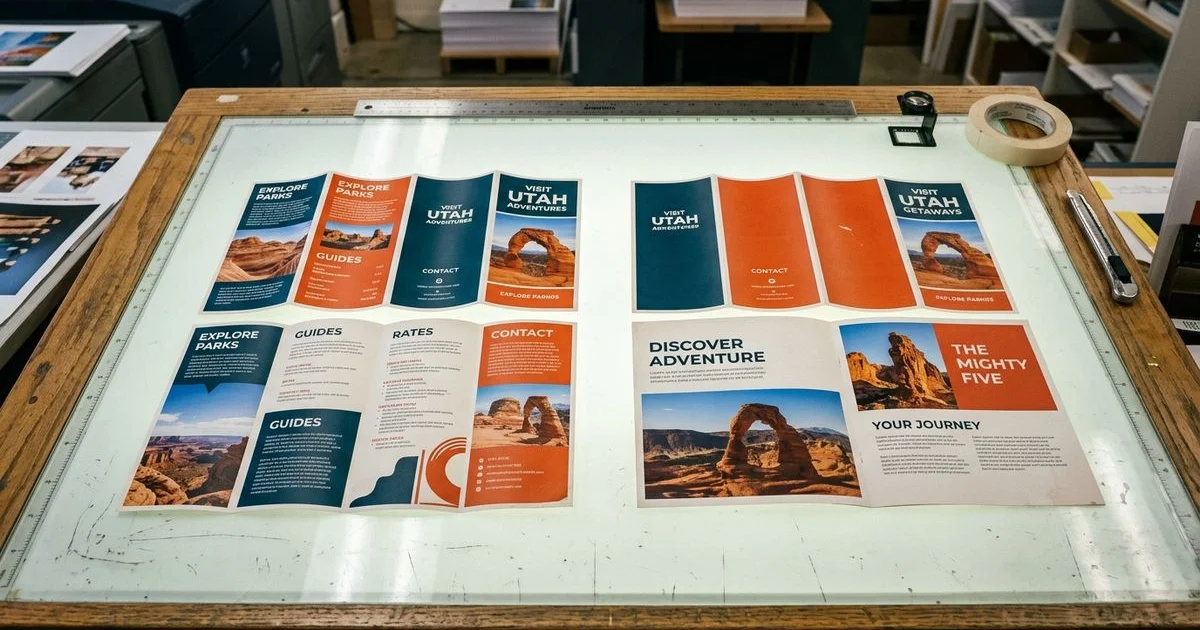
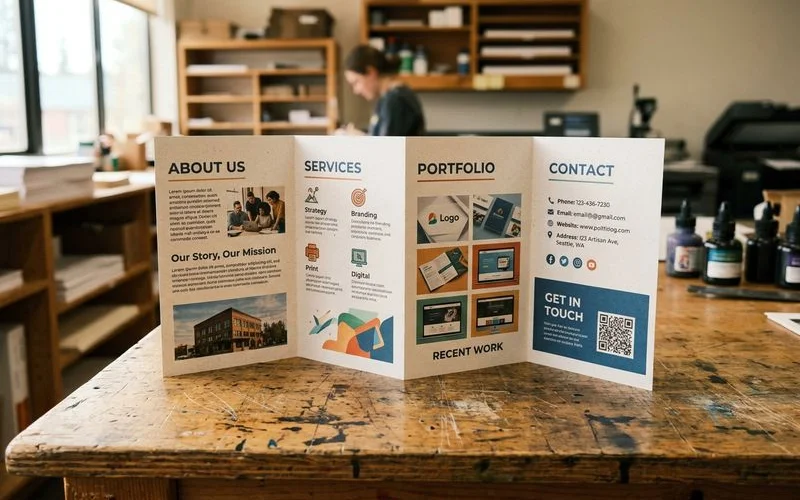
Our clients frequently ask for a layout that maximizes space while remaining highly portable. A tri-fold brochure takes a standard 8.5-by-11-inch sheet and folds it into thirds, creating six total panels. This leaves three panels on the front side and three on the back.
Standard Dimensions and Portability
When folded tight, the brochure measures roughly 3.67 inches wide. Industry-standard display holders are typically designed for 4-by-9-inch materials. This means a tri-fold slides perfectly into almost any lobby rack or tourist display in the US.
We always remind clients that this is the most common format at hotels, clinics, and car dealerships. The compact size makes it incredibly easy to mail. It fits neatly into a standard USPS #10 business envelope, which measures 4.125 by 9.5 inches, leaving just enough room to prevent tearing.
Layout Strategies and Best Uses
The six-panel layout lets you organize content in a highly structured way. You get a distinct cover panel, an inside spread divided into three sections, and a back panel. The inside right panel acts as prime real estate because it is the first thing people see upon opening the piece.
Our designers always account for unequal panel widths during the layout process. The panel that tucks inside the fold must be slightly narrower, usually about 1/8 inch less than the others. This slight reduction allows the paper to fold cleanly without buckling or creasing awkwardly.
USPS Mailing Requirements
If you plan to mail the brochure without an envelope, you must meet postal regulations. A 2026 USPS guideline requires folded self-mailers to use a minimum of 70-pound paper basis weight. Using lighter paper will disqualify your piece from automation discounts or cause jams in the postal sorting machines.
Best uses for tri-fold:
- Service overviews with multiple categories
- Product or restaurant menu listings
- Tour or special event information
- Materials meant for rack displays
- Direct mail pieces following USPS self-mailer rules
Understanding the Half-Fold
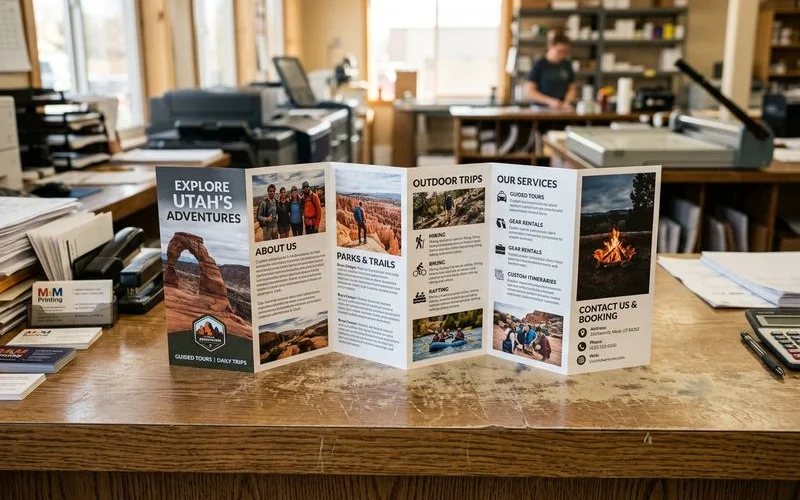
We often recommend the half-fold layout for projects requiring a more substantial, book-like presentation. This style takes the same 8.5-by-11-inch sheet and folds it straight down the center. You end up with four distinct panels measuring roughly 5.5 by 8.5 inches each.
The Booklet Experience
When completely folded, it functions like a small booklet or a premium greeting card. The half-fold gives you significantly more room per panel than a tri-fold design. Each page feels spacious and provides ample room for large images, detailed text, or both.
Our commercial printing data shows this format is a favorite for high-end corporate profiles. Real estate agents frequently use this layout to display detailed Multiple Listing Service (MLS) property statistics alongside large architectural photos. The format delivers a formal and substantial feel that builds immediate credibility.
Unlocking the Interior Spread
Because the brochure opens fully, the inside functions as one large double-page spread. This allows you to print a large, dramatic interior image that bleeds smoothly across both inside panels. Attempting a full-spread treatment on a tri-fold is much harder because the two interior fold lines interrupt the visual flow.
Best uses for half-fold:
- Comprehensive company or organization overviews
- Detailed real estate MLS property sheets
- Event programs for memorial services or galas
- Before-and-after construction showcases
- Summarized corporate annual reports
Tri-Fold vs. Half-Fold: Choosing the Right Brochure Format
We encourage comparing the specific benefits side by side to make the best decision. Let’s break down the key factors directly using current industry data.
Content Density and Display
Tri-folds give you six separate panels to organize distinct sections, making them perfect for breaking down a menu. Half-folds offer four larger panels with more breathing room, which suits narrative content and large images better.
Our measurements confirm the tri-fold wins effortlessly for portability and racking. The finished 3.67-inch width is the exact industry standard for US brochure racks. If your piece needs to sit in a hotel display or a trade show booth, the tri-fold is the smart call.
Mailing and Postage Considerations
Both formats can be mailed easily, but they require different strategies. Tri-folds fit perfectly in standard #10 envelopes and qualify for standard USPS First-Class letter rates. Half-folds fit neatly in 6-by-9-inch envelopes, which are also processed as standard letters as long as they stay under the maximum 6.125-inch height limit.
We closely monitor 2026 USPS commercial mailing rules to help clients save money. If you mail a heavy half-fold that exceeds 1/4 inch in thickness, the post office classifies it as a “flat” rather than a letter. This classification jump can significantly increase your postage costs per piece.
Cost and Production Comparison
Both folding formats use the identical 8.5-by-11-inch sheet size, so the base printing costs are virtually the same. The deciding factor for pricing is always your total quantity and your specific paper choice.
| Feature | Tri-Fold Format | Half-Fold Format |
|---|---|---|
| Total Panels | 6 narrow panels | 4 wide panels |
| Folded Width | 3.67 inches | 5.5 inches |
| Envelope Size | Standard #10 | Standard 6x9 |
| Average Print Cost | $235 (1,000 on 100lb gloss) | $235 (1,000 on 100lb gloss) |
| Best For | Menus, rack displays, tours | Portfolios, real estate, programs |
Other Fold Options Worth Knowing
Our shop handles many projects that require stepping outside the standard layouts. Tri-folds and half-folds are the most popular, but they are certainly not your only options for a great presentation.
- Z-fold: This style folds in alternating directions like a zigzag. It creates six panels measuring roughly 3.66 inches wide, exactly like a tri-fold, but it opens entirely differently. This format works perfectly for sequential, step-by-step information or timelines.
- Gate fold: The two outside panels fold inward to meet perfectly in the middle. It opens like a set of double doors to reveal a massive, wide interior spread. We frequently use larger 11-by-17-inch paper for this, folding it down to a standard 8.5-by-11-inch size to create a premium, high-impact presentation.
- Accordion fold: This features multiple parallel folds that expand outward like a fan. It works exceptionally well for large US maps, historical timelines, or any content requiring a long horizontal layout. A common mistake is using too thick of a paper stock for an accordion fold, which causes the brochure to spring open instead of lying flat.
If you have a specific idea in mind, just ask for advice. We can gladly fold a physical mock-up so you can test the exact dimensions before committing to a massive print run.
Paper Matters Too
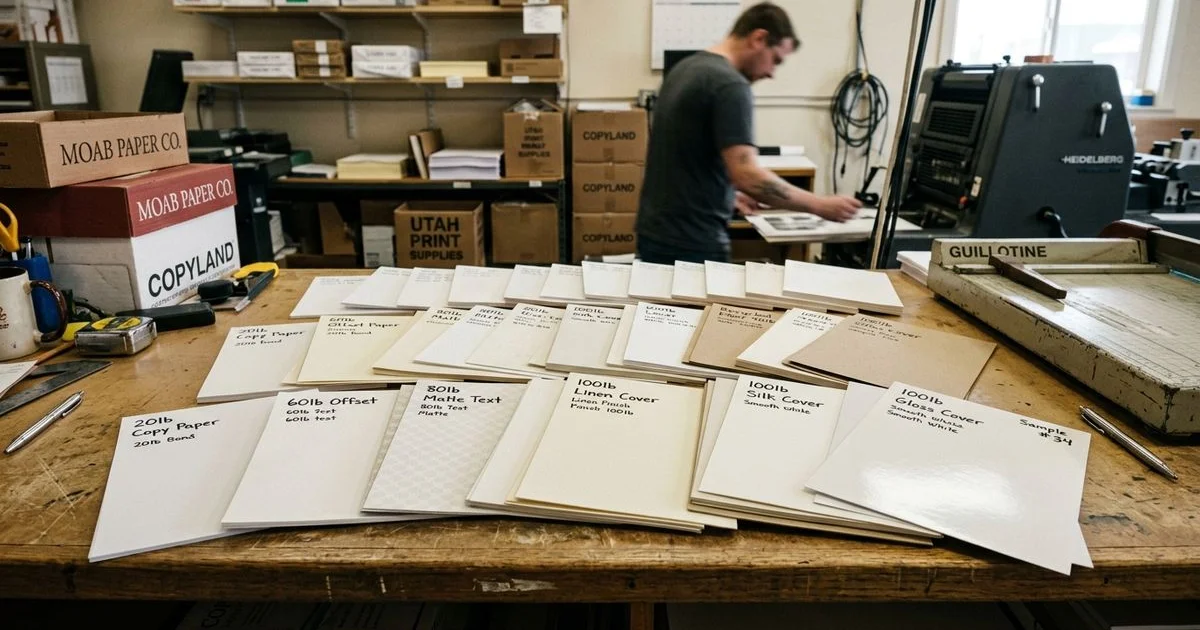
We always advise clients that the folding style is only half the battle. Your specific paper choice significantly impacts how your brochure looks, feels, and survives the US postal system.
Quality and Durability
The weight and coating of the paper dictate the final presentation quality. A cheap paper makes a great design look amateurish, while a premium stock elevates even the simplest layout.
Standard Commercial Options
Here are the most common commercial paper options:
- 60 lb. or 70 lb. uncoated text: Economical and highly writable. It offers a slightly informal feel, perfect for disposable handouts.
- 80 lb. text: The most popular mid-range choice. It delivers crisp color reproduction and a substantial, professional feel.
- 100 lb. gloss text: A premium option featuring a shiny finish. This paper is roughly 5 to 6 points thick, making it ideal for highly vibrant, image-heavy pieces.
- 80 lb. cover: Much stiffer and thicker. It measures close to 9 points in thickness and creates a rigid, booklet-like feel that resists tearing.
Our standard recommendation for most marketing pieces is an 80-pound text stock. This specific weight hits the perfect balance between professional durability and cost-effectiveness.
Start Your Brochure Project
We are ready to help you bring your next marketing vision to life. A well-designed printed piece is a proven way to connect directly with your target audience. Mastering the basics of Tri-Fold vs. Half-Fold: Choosing the Right Brochure Format is just the beginning of a successful print campaign.
Browse our Brochures service page for extensive details on custom formats, paper weights, and current pricing.
If you already know exactly what you need, you can request a quote today and tell us about your specific goals.
My Color Copies Team
Print Production Specialists
My Color Copies is a Utah-based print team serving both local and out-of-state customers with affordable, fast printing services.
Digital Printing ExpertiseNeed help with your print job?
We are here to help with file prep, paper choices, and pricing.
Request a Quote